


The Department of Education operates a range of aid programs for elementary and secondary schools. The aid and related regulations have generally failed to lift academic achievement. The department also subsidizes higher education through student loans and grants. Unfortunately, that aid has fueled inflation in college tuition and is subject to widespread abuse.
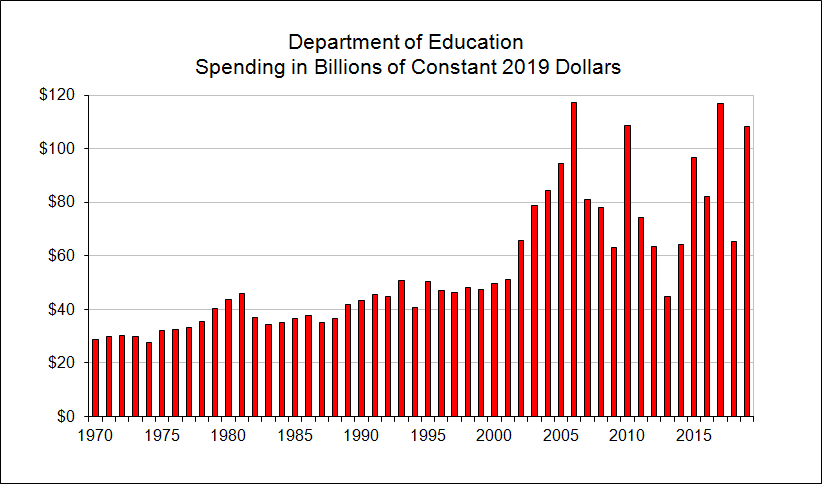
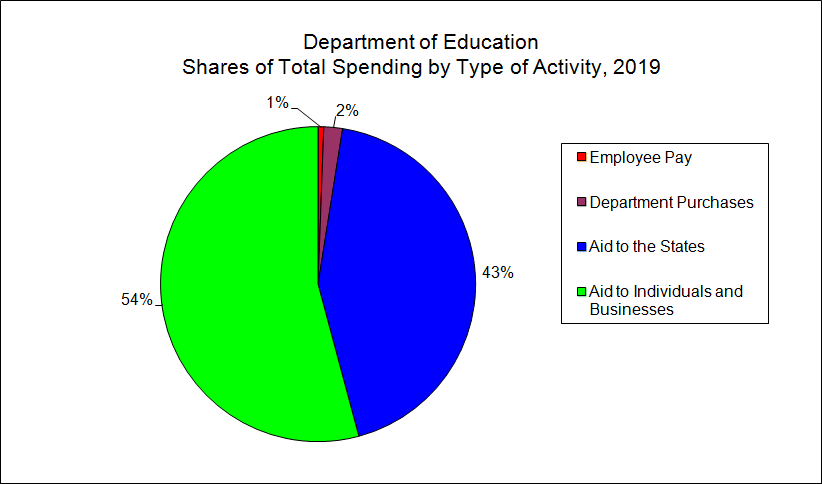
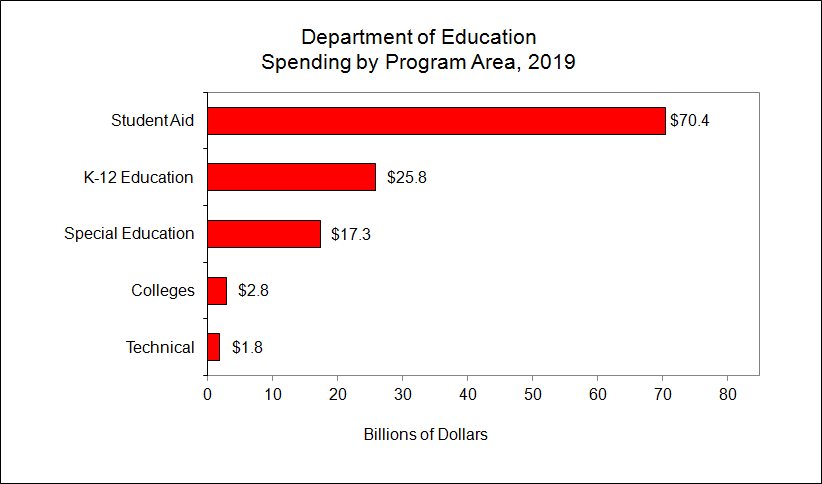
The department will spend $108 billion in 2019, or $850 for every U.S. household. It employs 4,000 workers and operates more than 110 different subsidy programs.
Downsize This!
- K-12 Education Subsidies. Federal intervention into the nation’s schools has consumed great deals of taxpayer money and created large bureaucracies to administer the funding and regulations. It has produced little, if any, improvement in academic results.
- Higher Education Subsidies. Federal grants and loans for college students have contributed to soaring inflation in tuition costs. Student grant and loan programs have also been subject to high levels of fraud and abuse.
Timeline of Government Growth
Further Reading
Cato Experts
- Neal McCluskey, Director, Center for Educational Freedom
- Corey DeAngelis, Policy Analyst
"Only a truly competitive educational industry can empower the ultimate consumers of educational services—parents and their children."
Milton Friedman, Wall Street Journal, September 20, 2000