


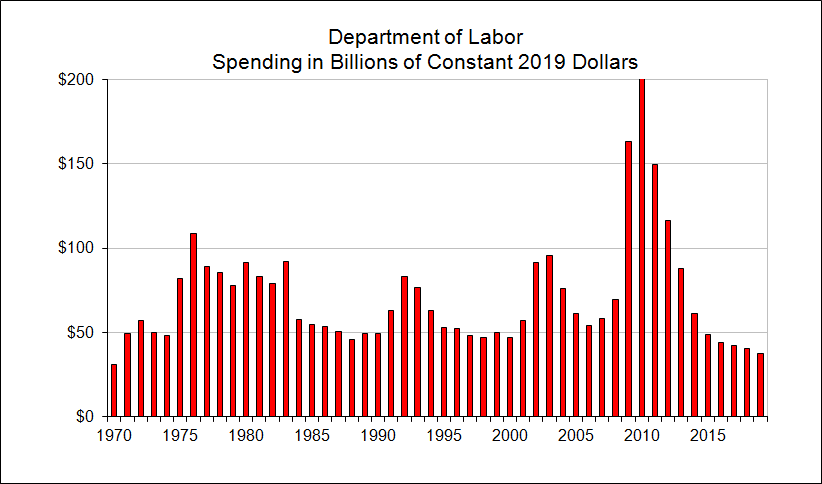
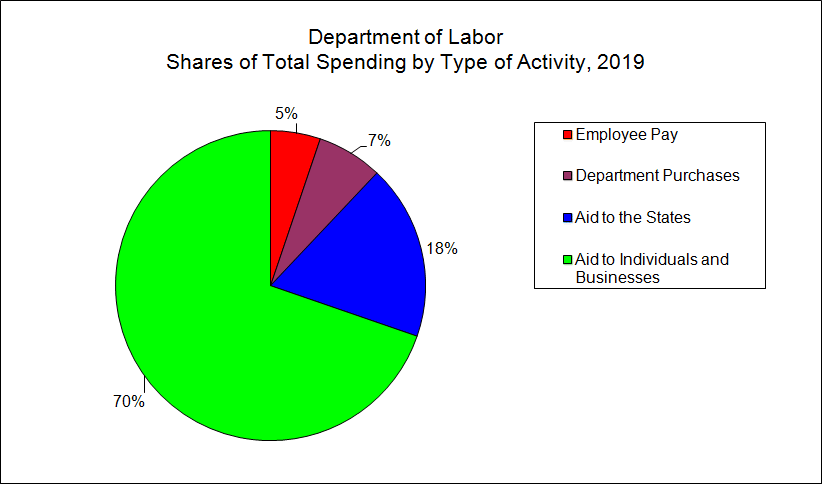
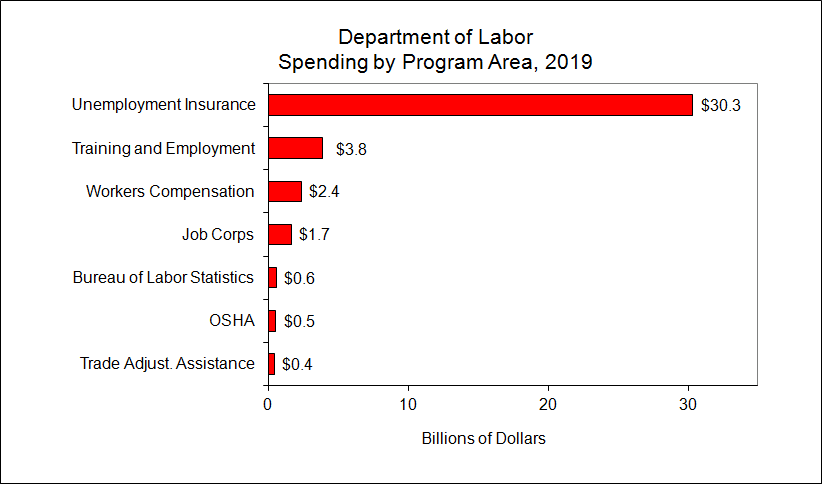
The Department of Labor’s budget is dominated by the costly unemployment insurance system. The department funds numerous employment and job training programs, which are generally ineffective and duplicative of services available in the private sector. The department also oversees labor union laws and workplace regulations that restrict freedom and are costly to workers and businesses.
The department will spend $37 billion in 2019, or $290 for every U.S. household. Spending has declined as the economy has grown in recent years. The department employs 17,000 workers.
Downsize This!
- Unemployment Insurance. The UI system is costly to taxpayers and creates numerous economic distortions. Federal involvement should be ended and the states left free to design their own systems.
- Employment and Training Programs. These programs have never worked very well, are little used, and are little needed because private markets provide many options.
- Labor Union Laws. Federal union laws that mandate exclusive representation, union security, and prevailing wages are costly to the economy and restrict individual freedom. They should be repealed.
- Trade Adjustment Assistance. This program provides benefits for certain workers put out of their jobs by foreign trade, but it has no sound basis in economics.
- Minimum Wage Laws. These laws are supposed to help workers, but the evidence suggests that they damage the economy and harm less-skilled workers.
Timeline of Government Growth
Further Reading
Cato Experts
- Chris Edwards, Editor, DownsizingGovernment
- Peter Van Doren, Editor, Regulation
- Walter Olson, Senior Fellow
"What is euphemistically called collective bargaining by union leaders and 'pro-labor' legislation is bargaining at the point of a gun . . . It is a dictate forced upon the employer . . . The issue is not the right to form associations.”
Ludwig von Mises, Human Action, 1949.