


The Department of Transportation subsidizes and regulates highways, airports, air traffic control, urban transit, passenger rail, and other activities. However, taxpayers and consumers would be better off if transportation activities were privatized, which has been a global trend. Opening up the financing and operation of infrastructure to the private sector would save money, spur innovation, and reduce congestion.
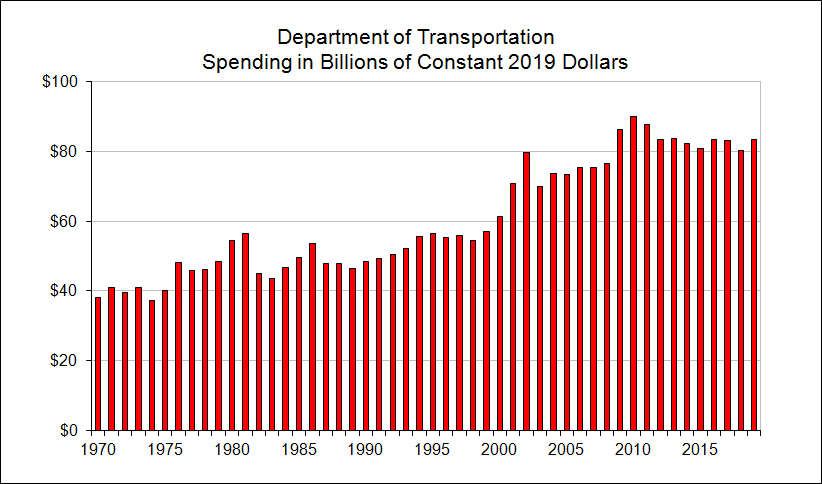
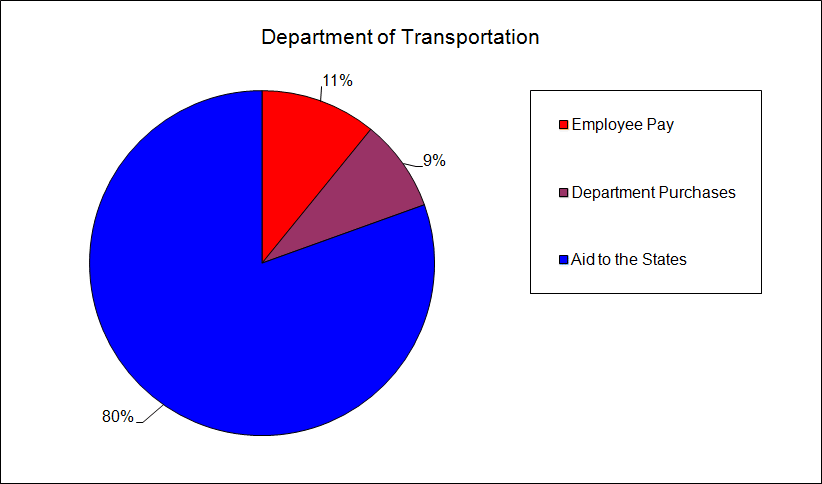
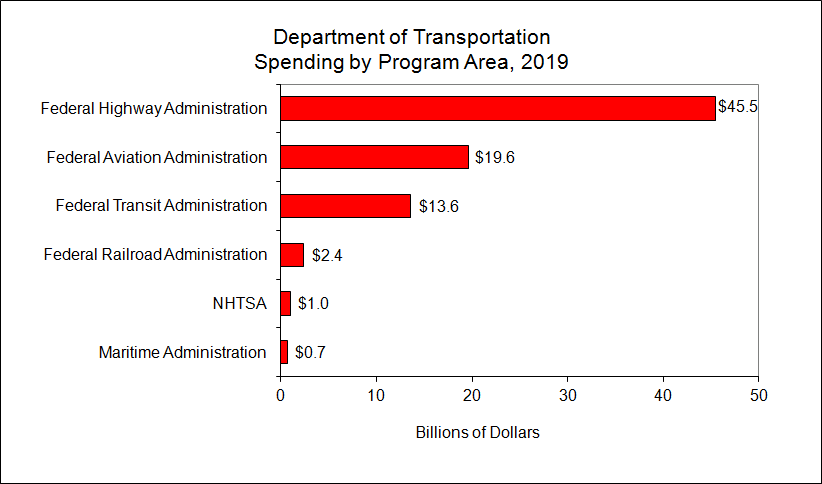
The department will spend $83 billion in 2019, or about $650 for every U.S. household. The department employs 56,000 workers.
Downsize This!
- Highways. Highway aid gets misallocated and federal intervention raises costs. Federal aid and fuel taxes should be ended, and the states should pursue toll highway projects with the private sector.
- Urban Transit. The federal government spends billions of dollars a year on urban rail systems even though buses are often more efficient. Without federal subsidies, cities would make better choices for their local transit needs.
- Air Traffic Control. The bureaucratic Federal Aviation Administration has struggled to modernize our air traffic control system. The system should be privatized as a self-funded nonprofit organization.
- Airports. U.S. airports are owned by state and local governments and subsidized by the federal government. But the global trend is toward more efficient private airports that are self-funded.
- Amtrak. Government-run railroads suffer from political meddling, high labor costs, and poor management. Amtrak should be privatized to provide more efficient service.
- High-Speed Rail. High-speed rail systems usually lose money and carry only a small share of intercity passengers.
Timeline of Government Growth
Further Reading
Cato Experts
- Randal O’Toole, Senior Fellow
- Chris Edwards, Editor, DownsizingGovernment
- Peter Van Doren, Senior Fellow
"Having considered the bill this day presented to me entitled 'An act to set apart and pledge certain funds for internal improvements,' and which sets apart and pledges funds 'for constructing roads and canals, and improving the navigation of water courses' . . . I am constrained by the insuperable difficulty I feel in reconciling the bill with the Constitution of the United States to return it with that objection to the House of Representatives. The legislative powers vested in Congress are specified and enumerated in the eighth section of the first article of the Constitution, and it does not appear that the power proposed to be exercised by the bill is among the enumerated powers."
James Madison, March 3, 1817. Veto of federal transportation spending.