


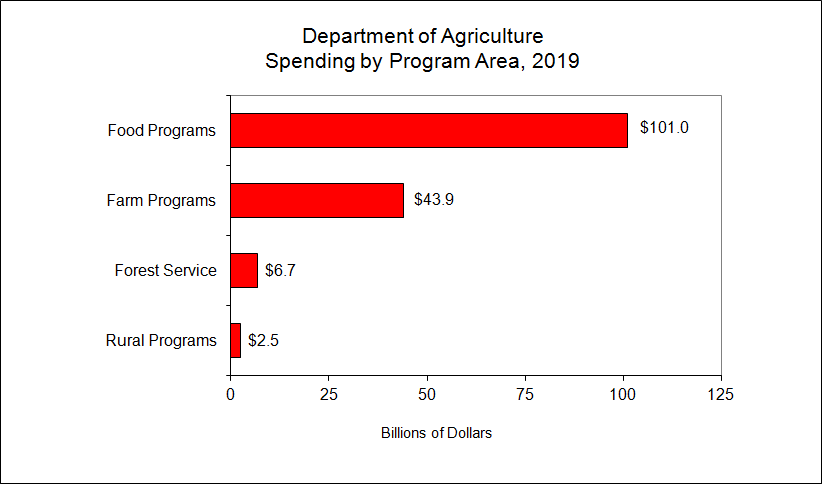
The Department of Agriculture provides an array of subsidies for farmers and imposes extensive regulations on agricultural markets. It operates the food stamp and school lunch programs, and administers numerous subsidy programs for rural areas. The Forest Service is within the Department of Agriculture.
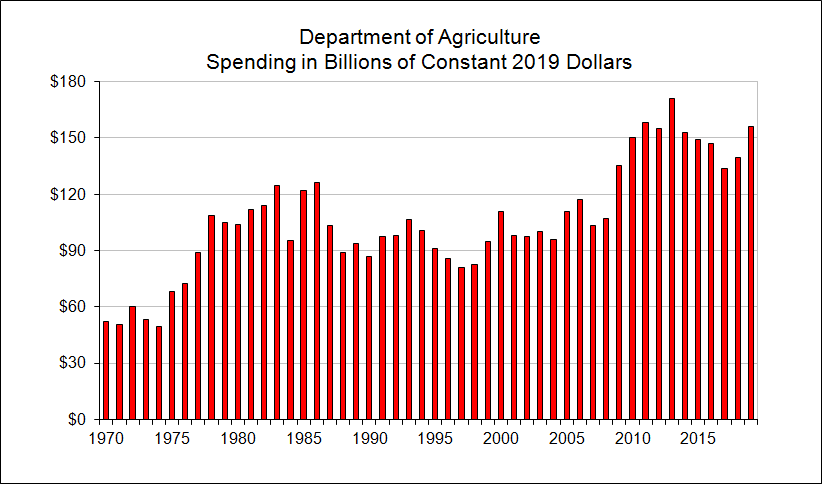
The department will spend $156 billion in 2019, or $1,220 for every U.S. household. The department operates 278 subsidy programs and employs 90,100 workers in about 7,000 offices across the country.
Downsize This!
- Agricultural Subsidies. The department provides up to $30 billion annually to farmers of corn, cotton, rice, soybeans, wheat, and other crops. It also aids farmers with research, loan, and insurance programs.
- International Food Aid. As Congress tackles a major farm bill in coming months, it should consider repealing USDA’s food aid programs.
- Rural Subsidies. The department runs numerous subsidy programs for businesses and individuals in rural areas.
- School Food Subsidies. Congress should repeal school food programs to reduce budget deficits and hand power back to the states.
- Forest Service. The Forest Service oversees 193 million acres of forests and provides subsidies to businesses and state governments.
- Supplemental Nutrition Assistance Program (SNAP). When considering the farm bill, Congress should examine the Supplemental Nutrition Assistance Program’s (SNAP’s) poor record and consider ways to cut the program.
Timeline of Government Growth
Further Reading
Cato Experts
- Chris Edwards, Director, Tax Policy Studies
- Randal O’Toole, Senior Fellow
"Cato is on the right track with its proposals to downsize the USDA. Many of the department’s programs originated in the Great Depression and are completely out of date and no longer needed, if they ever were. Downsizing the USDA would help move American agriculture into the 21st century."
John R. Norton, Deputy Secretary of Agriculture, 1985-1986