


The Department of Housing and Urban Development runs housing and community programs that are properly the responsibility of local governments and the private sector. Its public housing subsidies, rental aid, and housing finance programs are costly and damaging. The department’s poor management and misguided policies have led to fraud, corruption, and waste.
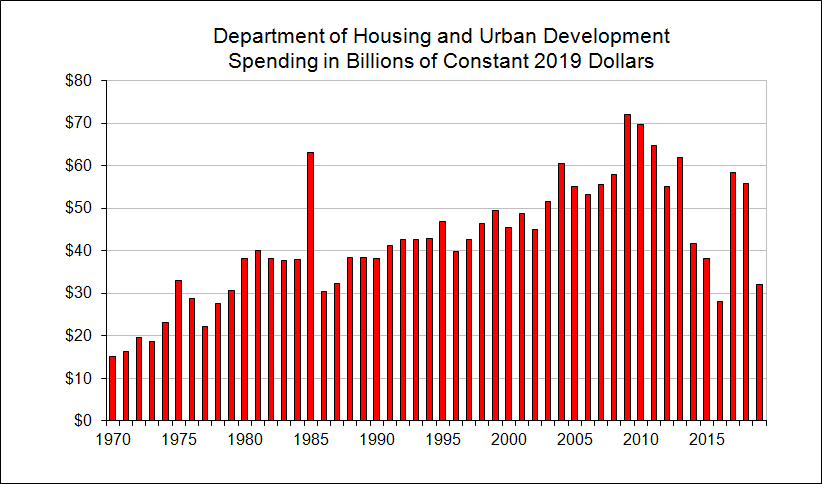
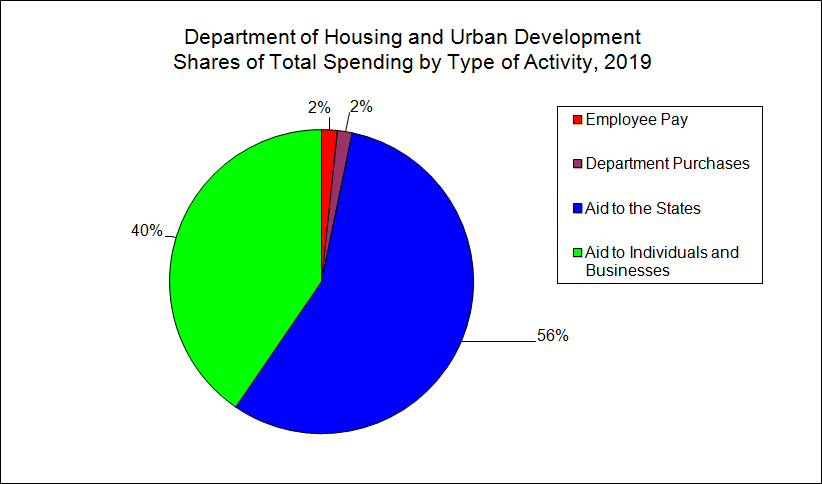
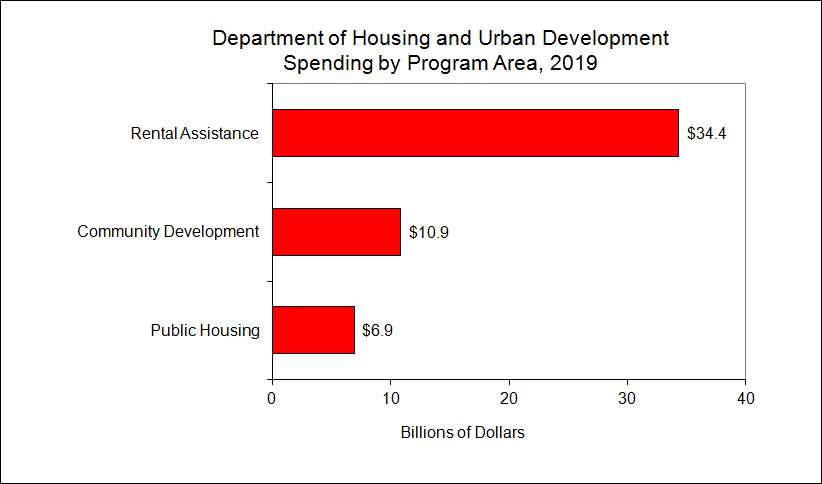
The department will spend $32 billion in 2019, or $250 for every U.S. household. It employs 8,300 workers and operates 116 subsidy programs.
Downsize This!
- HUD Scandals. The department has suffered many management failures, with corruption and cronyism a common occurrence in the executive suites.
- Public Housing and Rental Subsidies. Public housing projects and federal vouchers for low-income renters have proven to be expensive failures.
- Housing Finance and the 2008 Financial Crisis. Programs to subsidize home ownership have created large economic distortions and were an important cause of the recent financial crisis.
- Community Development. These programs violate traditional federalism and spend money on properly local and private activities such as museums and parking lots.
- Low-Income Housing Tax Credit. The LIHTC gives $9 billion a year in tax credits to developers. The program is complex, prone to abuse, and inflates construction costs.
Timeline of Government Growth
Further Reading
Cato Experts
- Chris Edwards, Editor, DownsizingGovernment
- Vanessa Brown Calder, Policy Analyst
"[The Department of] Housing and Urban Development has done an enormous amount of harm. My god, if you think of the way in which they have destroyed parts of cities under the rubric of eliminating slums . . . there have been many more dwelling units torn down in the name of public housing than have been built."
Milton Friedman, Interview, Hoover Institution, February 10, 1999